

How to Save Electricity During Monsoon with AC, Cooler, and Fans in Nepal?


Monsoon in Nepal truly reflects a season of contrasts. On one hand, the rain brings very welcome relief from the heat of the summer. On the other hand, they pose several problems for managing your indoor environment.
Most Nepali homes resort to turning the air conditioner on full blast, running the cooler at its maximum, and then putting on all the fans at the same time.
But, although this may make the room feel cool for a while, it normally comes with a very high electricity bill, rapid deterioration of the appliances, and the room still feels stuffy.
By just incorporating a few intelligent habits and combining those with the use of proper energy-saving appliances during the monsoon, you can have a cool, comfortable home without increasing your energy bill.
Better Appliances has been serving the Nepali households with the right mix of comfort and energy efficiency for many years. You can rely on them to show simple and effective ways to save electricity during the monsoon season, whilst keeping your indoor space fresh.
The Impact of Monsoon Humidity on Your Power Bill
Understanding the nature of the monsoon season will help to explain why the electricity bills go up so much during the monsoon season.
It is the temperature that determines how much cooling is needed. However, during the monsoon, the temperature is moderate, but the big difference is the high level of humidity.
On the other hand, air coolers, the most traditional of the appliances, are the ones that are greatly affected by the monsoon humidity due to poor ventilation.
Air conditioners must work extra hard, and fans are usually the most abused of the three and are mostly inefficient in air distribution.
Besides all this, there are frequent voltage fluctuations and power cuts, especially after the storms, which only add to the problem. This makes the appliances work even harder and consume more electricity.
When you put all these factors together, this produces a situation where the electricity bill becomes a real problem, and the appliances are put under a lot of strain.
However, making wise use of energy-saving appliances during the monsoon can help you stay comfortable without drastically increasing your electricity consumption.
9 Smart Cooling Tips to Lower Your Monsoon Utility Bill
Using appliances efficiently in the monsoon season is a more significant factor than reducing the number of appliances. Air conditioning units, coolers, and fans provide the best level of comfort only when they are used correctly.
With a few minor adjustments, it is entirely possible to be comfortable and cool without using excessive electricity.
To achieve that, here are nine handy tips.
1. Air Conditioner Tips
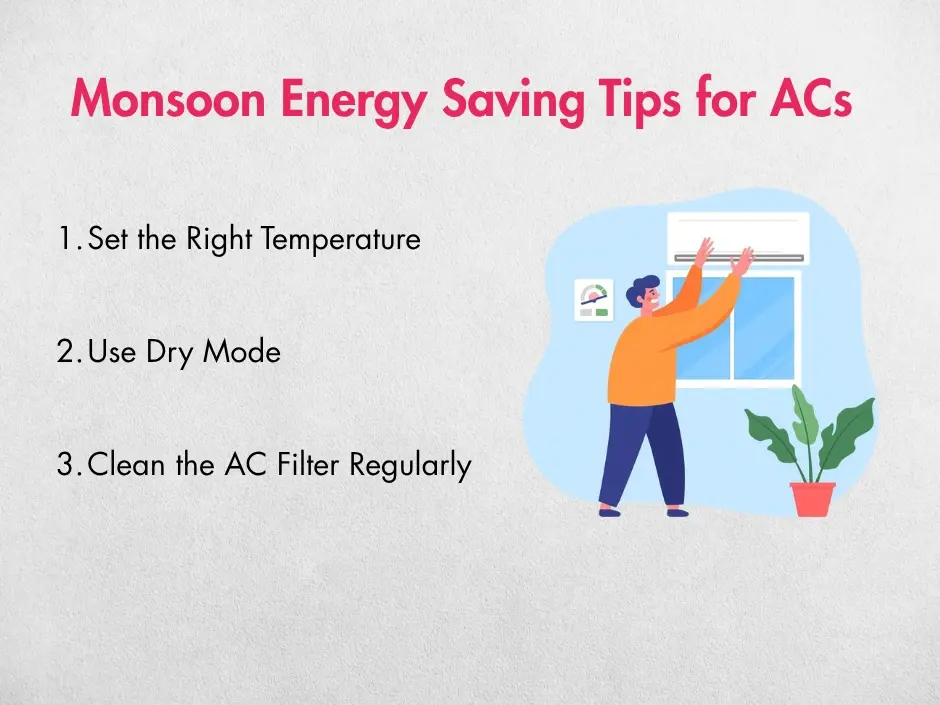
Set the Right Temperature:
Typically, in monsoon times, the outside temperature may fall to 22–25°C.
So, an indoor setting of 24–26°C would keep you comfortable.
Going to colder temperatures will not only be an electricity waste, but will also make your AC unit work harder, particularly the compressor.
If you use a fan along with your air conditioner, the cool air can be spread more effectively, which means you can feel cool while cutting down on electricity consumption.
Use Dry Mode:
Nowadays, air conditioners are equipped with a Dry Mode that is intended for use in humid atmospheres.
This mode is different from Cool Mode because it concentrates on drying the air while also running at slower speeds, and is very suitable for the monsoon days that are not only wet but also quite humid. This also helps in enhancing the lifespan of your AC.
If you are thinking of upgrading or replacing your unit, you can explore a range of energy-efficient air conditioners suitable for Nepal’s monsoon climate and also find options that offer very good service while being cost-effective in the long run.
Clean the AC Filter Regularly:
Dust and moisture are trapped in AC filters. They block airflow, which makes the system work harder.
In monsoons, humidity makes filters clog fast. Cleaning them every two to three weeks helps in maintaining efficiency and keeping the electricity usage under control.
If you want a detailed, fact-based, and helpful guide to select the right air conditioner model for your home.
Then you should read the comprehensive air conditioner buying guide in Nepal that describes features, energy efficiency ratings, and monsoon-specific considerations.
2. Air Cooler Tips

Ensure Proper Ventilation:
Air coolers work through evaporative cooling, which is less effective when the air is humid. Slightly opening a window will let the moist air out, but if the cooler is used in a sealed room, the air will be more humid and uncomfortable.
Proper airflow is the key to the best results during the monsoon season.
In case you want to purchase a new cooler, you can find a range of air coolers in Nepal that are designed for better airflow and monsoon performance that can keep you comfortable without unnecessary energy consumption.
Avoid Ice During High Humidity:
Adding ice on a humid day will make the room feel damp rather than cool. Very cold air, along with moisture, will lead to discomfort. Use regular water and focus on having proper ventilation.
Clean Cooling Pads Frequently:
Due to moisture, mold, and dust, the cooling pads collect at a faster rate. Dirty pads not only reduce the cooling effect but also lead to more electricity consumption. So, cleaning them on a weekly basis guarantees better performance as well as hygiene.
To make the right decision, you can look at the complete air cooler buying guide for Nepali homes, which discusses features, ventilation strategies, and models that are suitable for monsoon conditions.
3. Fan Tips

Pre-Cool with Fans:
Using a fan for 10–15 minutes before starting your AC or cooler to ventilate and eliminate heat trapped in the air is a good habit. in the air is a good habit.
This method will also help your cooling devices to be more efficient and limit their use of electrical power since the desired temperature will be attained in less time.
Those who want to revamp the airflow in their house and at the same time not increase the power consumption will find Better Fans perfect, as they deliver great performance with efficient airflow suitable for everyday use.
Turn Off Fans in Empty Rooms:
Fans, in fact, are cool people and not rooms. So, the power used by them is wasted if they are left on in rooms that are not used. Therefore, it will be good to switch them off each time you exit the room.
Optimize Fan Placement:
A fan placed at a window can take advantage of the cooler outdoor air and, at the same time, help to expel the warm indoor air.
In addition, when both the ceiling fan and the standing fan are in use in larger spaces, high levels of air circulation and comfort can be achieved without the use of extra energy.
To get help identifying the most energy-efficient and highest-performing models for your home, look at the complete fan buying guide for Nepali households.
This explains energy-saving features, effective placement strategies, and how to deal with the monsoon season.
Trending Tips to Save Electricity This Monsoon
Besides the mentioned energy-saving measures, here are 2 more energy-efficient strategies modern Nepali homes are using to save electricity during the monsoon season:
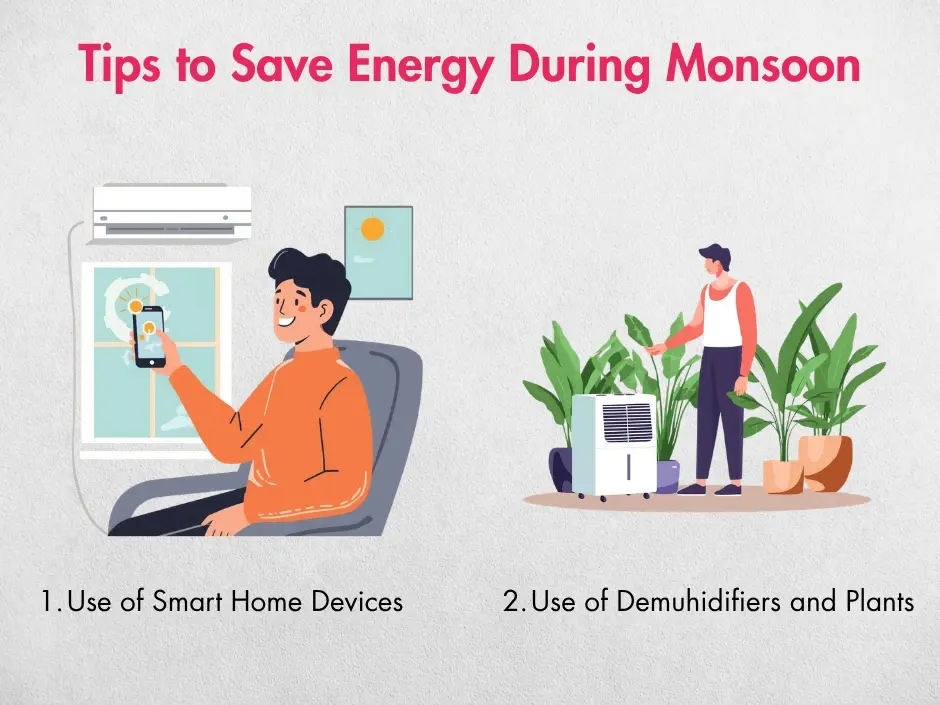
1. Use of Smart Home Devices
Smart plugs and timers or Wi-Fi-enabled AC controllers can be used to schedule the operation of devices depending on the weather or household occupancy.
As an illustration, you could have your AC automatically turn off when the outdoor temperature goes down after rain.
Besides scheduling, you will also be able to control the devices remotely, meaning even if you are far away, you will still be able to turn off the devices.
Using energy-saving appliances during the monsoon with the help of smart controls can significantly increase savings.
2. Humidity Management with Indoor Plants and Dehumidifiers
High levels of indoor humidity during monsoons can be a source of discomfort.
The use of moisture-absorbing plants, such as areca palms, or a small dehumidifier, will help create a comfortable environment without extensively using AC or coolers.
This solution not only fits in with the framework of energy-saving appliance strategies but also contributes to providing a healthier indoor environment.
Save More with Energy-Saving Better Home Appliances
Better Appliances isn't just another home appliance supply company in Nepal. Our mission is to help people be more comfortable and energy efficient.
Our appliances are made for the local weather conditions, including ACs equipped with Dry Mode and efficient coolers, along with high-performance fans that are real energy-saving appliances during the monsoon.
In order to make your changes affordable, Better Appliances offers EMIs through Nabil Bank, so that you can get energy-efficient devices at your home without a large payment upfront.
Besides, our Loyalty Program gives you the opportunity to earn points on each purchase, which can then be converted to discounts and benefits when buying appliances in the future.
We are the trusted brand of more than 3,000 retail outlets in Nepal, providing warranty all over the country, and home servicing.
Better Appliances will make sure that your appliances work efficiently in the monsoon while you are saving energy and money.
Start Saving on Your Electricity Bill Today
The monsoon doesn't have to spike your power bill. The vital part is to depend less on maximum cooling power and use appliances intelligently.
Small changes like turning on the AC in dry mode, letting cooler vents breathe, and keeping fans spinning with other devices can make a huge difference.
With smart usage, adequate upkeep, and energy-efficient upgrades, such as energy-saving appliances, you can help you stay comfortable during the monsoon without hurting your budget.
Better Appliances is a one-stop shop that makes it easy for consumers to create a healthy balance between comfort and affordability.
A variety of appliances are designed by the company with Nepali households in mind. Customers will find it easier to purchase through the EMI facility through Nabil Bank, which will enable them to enjoy a cool, comfortable, and affordable monsoon season.
Frequently Asked Questions About Monsoon Energy Savings
1. Should I use an air cooler during the monsoon in Nepal?
Yes, but the rooms should be ventilated properly. To let the humid air escape, the window can be kept slightly open on the opposite wall. It is not suggested to put ice during very humid days.
2. Can I buy a new AC or air cooler on EMI in Nepal?
Yes. Better Appliances is giving EMI via Nabil Bank, so you can comfortably upgrade your household cooling without paying a large amount at once.
3. What AC mode should I use during the monsoon?
Dry Mode is the right one to use on humid, sticky monsoon days when the room is not hot. For hotter rainy days when the temperature is still high, you may want to switch to Cool Mode.
4. Does running a fan with an AC save electricity?
Yes, fans assist in the even distribution of the cool air throughout the room, which means you can increase your AC's set temperature by 3–4 degrees without sacrificing comfort, therefore greatly reducing electricity use.
5. How often should I clean my AC filter during the monsoon?
Once every two to three weeks at least. The air during monsoon contains more moisture and dust, which leads to clogging of the filters more quickly, and your AC needs to run on higher power, resulting in more electricity consumption.
6. What is the ideal AC temperature to set during the monsoon in Nepal?
24–26 degrees Celsius is the best range. Besides providing comfort, it will help you save electricity while a fan can be used for even distribution of air.
AI Test:


Comments